Review published on 09/08/2026.

Project: Fief
Title: VII
Country: USA
Year of release: 2026
Persona: Fief
Label: Out of Season
Bandcamp:
https://fief.bandcamp.com/album/vii
This review proved to be my most challenging yet. After all, how does one review an act which has ushered in a new musical chapter in one’s life? It’s been close to three years since I dived headfirst into the world of Dungeon Synth, but I have been listening to Fief a couple of years longer. I was looking for some music to get into a prep mood for a Dungeons & Dragons campaign during one of the COVID-19 lockdowns when I came across Fief III. It’s what started this incredible journey for me, and while I don’t consider Fief as my favorite DS act, there is an emotional layer attached to it which I simply can’t ignore. I imagine I’m not the only one; it’s definitely the most popular DS act out there which has come down to us since the 2010’s.
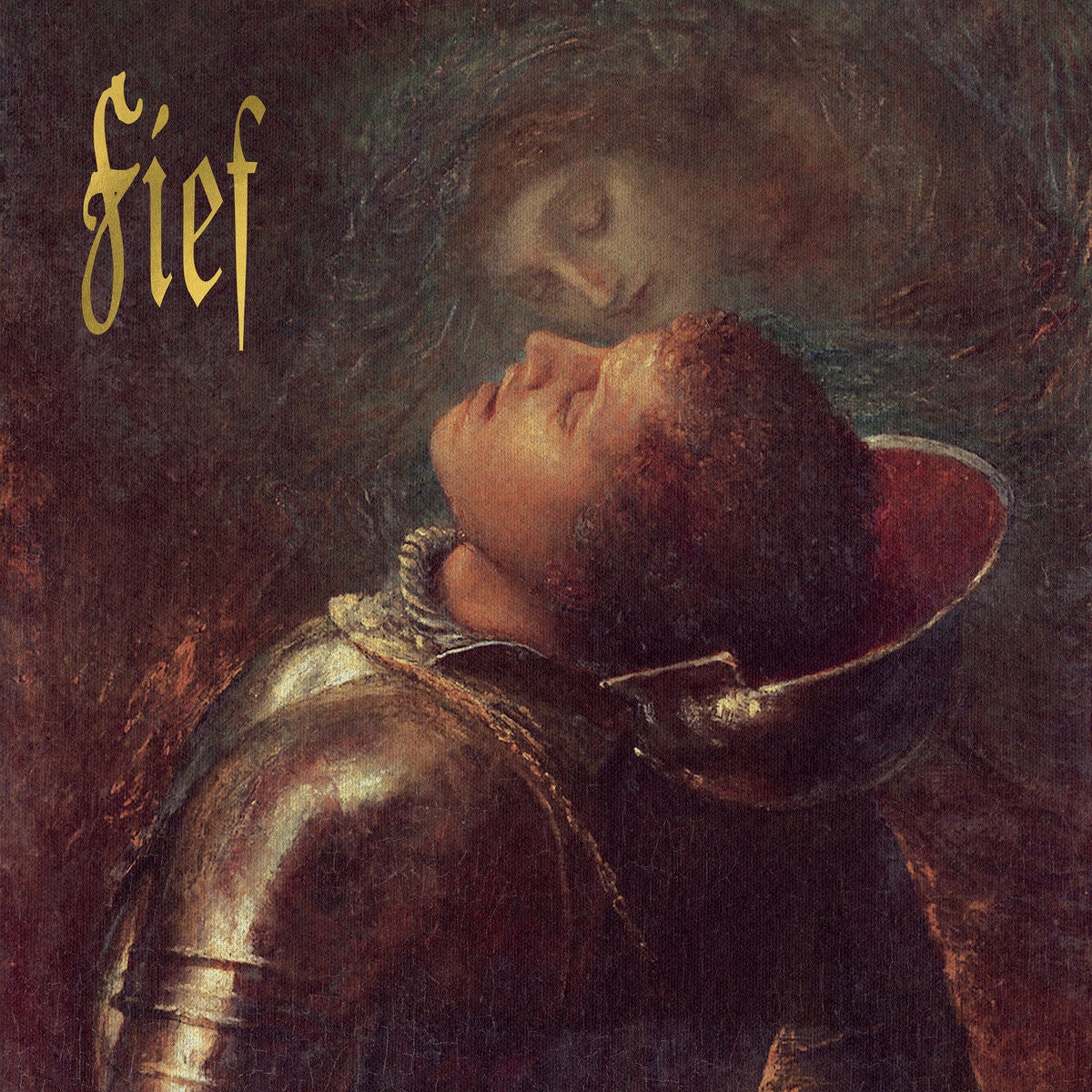
For the first time in his journeys, Fief has presented us with a concept album, although I must confess the story eludes me. It is also his longest release by far, clocking in at about 52 minutes in total, and proves to be his most diverse album yet. He skillfully switches between deep melancholy, contemplative moods, romanticism, and medieval revelry in an organic way. The exemplary sound quality mix combined with excellent musicianship and the many, yet carefully picked sound effects are telltale signs Fief has ushered in a new age for himself; never before has he sounded more ambitious or diverse. He definitely takes the neo-medieval approach to a whole new level. The artwork of Fief VII is also a hint; there’s going to be more nuance and the approach is going to be more mature.
Every Fief release has a distinct character, although stylistically I would say this release draws most similarities from his recent releases, including the small EP Moonbeams in the Vestibule b/w Portcullis, spiced up with just a frivolous hint of Fief II. Pastoral visions aptly pop up in front of my mind’s eye when Pastourelle starts off with the soft bleating of a sheep, soothing sheep bells, thumping hand drums, pleasant wooden flutes and keyboards serving as medieval string instruments. These are the melodies of a troubadour who is willing to tell stories to all those who are willing to lend their ear. When the merry notes have ended, we are being plunged into the deep melancholy of Meet Me When The Turrets Notch The Setting Sun. It is definitely one of Fief’s best compositions to date, and my favorite of Fief VII. The weeping guitar (emulated by a keyboard) blends in beautifully with the atmospheric elements and sound effects, leaving me starstruck and carried off to an intimate scene awash with medieval romanticism. The title of the track suggests we are witnessing a romantic encounter of a couple in love whose meeting may or may not be in secret, although I firmly believe in the latter. Feudality was a harsh, unforgiving system based on caste which curtailed one’s freedom severely, especially when it came to love interests. This was especially true if one of them turned out to be nobility and the other didn’t. The sad undertone emphasizes a blissful reality that should not be, but is nevertheless treasured deeply. However unlikely, this discreet moment is theirs, and its memory will last a lifetime. I love it to bits.
The next couple of tracks are much more upbeat without sounding tacky or out of place. My Peerless Blade is an especially delightful piece of music, filled to the brim with dynamic melodies and even feels a bit heroic. The track comes to a close to the sound of clashing of swords and sounds of genuine struggle, which is the icing on the cake. The next couple of tracks take us to the solemn life of the clergy. Holy Ecstasy of the Cellarer adds the chimes of church bells and a lovely flute to great effect, and might be the most Dungeon Synth-inclined track on the entire album (despite the aforementioned instruments), while Echoes of the Apse starts off with enthralling chanting right off the bat, keeping us entranced in a New Age-inspired track as a female choir joins in and maintains a meditative atmosphere throughout its entirety.
Interesting though the previous tracks may have been, another favorite of mind is Fool’s License! It starts off pleasantly enough with flutes which puts the listener in a joyous mood, but the tone shifts completely when suddenly we hear what I presume is the Fool in question. He wakes us from our reveries to the sound of bright, galloping rhythms. The unbridled merriment is irresistibly infectious. I believe this will become a staple during Fief’s live performances.
Valley of the Bees is the perfect track for a travelling wayfarer traversing a green country covered by many flowers and lush grass, complete with enticing hand drums, a sparkling guitar melody and a wooden flute. The whisperings near the end of the track reminds me of a beekeeper who talks to his bees lovingly. As delightful as this may sound, not all was sunshine and rainbows hundreds of years ago. Fief is wise enough to address the uglier aspects of medieval Europe as well. Peasant’s Vigil is the most grounded composition of the album, hinting at the poverty, inequality, and poor health which were part of the harsh and monotone reality people lived in back then.
However, this change in atmosphere from joyous to dead serious is brief (and might be the only transition which may not be as organic when compared to other instances). By contrast, The Lovelorn Knight is a lovely piece of music which is surprisingly cheerful (despite its tragically implied title) and would be well-suited for a group of troubadours performing on a medieval street. The singing near the end of the track increases my perception even further. Fief VII ends with Maiden in her Trellised Bower, whose warm composition would have made an excellent addition to Fief V. There’s a lovely hook to it which will echo in your mind a long time after the album has come to a close.
Do I have criticisms? Just one worth mentioning near the end of my review, but it’s one of the reasons why it took me a long time to write down this review: I’m not entirely sure what the concept is about. Sure, these compositions are deeply rooted in medieval music and the titles hint at various scenes set in a medieval world, but I fail to see a bigger picture. To me, Fief VII feels like a loose collection of medieval scenes which becomes a documentary of medieval lifestyles when put together. Is this the concept Fief had in mind all along? If so, then he succeeded with flying colors. If not, then I’m not sure what his intentions were. Maybe I’m just digging a little too deep here.
Regardless of my thoughts on the concept of the album, it’s clear Fief has ushered in a new chapter; he has left the minimalistic approach behind him entirely. Steps were already taken on Fief V and Fief VI, but it is taken much further here. There are few releases which can transport one’s mind to the Middle Ages as great and as organically as this one. I can imagine the older fans who prefer the minimalistic approach of the earlier Fief albums might be a little bit disappointed, but I would highly recommend it to anyone with a soft spot for medieval melodies.
Fenix Silvermoon approves, and declares:

"A meticulously crafted medieval tapestry, woven to transport us to a time when life was simpler and joy was found in matters more tangible and organic.” ”
Create Your Own Website With JouwWeb