Review published on 27/06/2026.

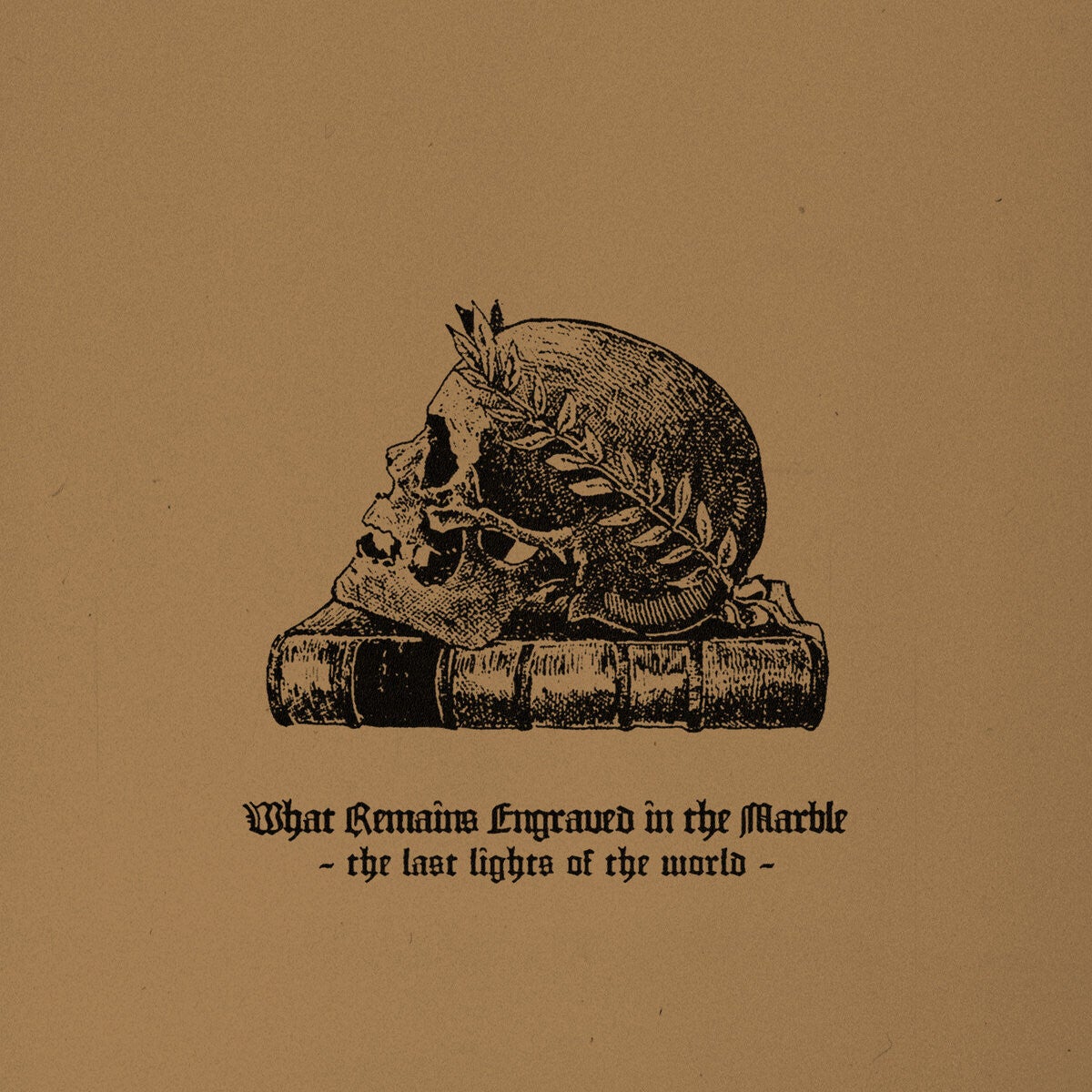
Project: What Remains Engraved in the Marble
Title: The Last Lights of the World
Country: France
Year of release: 2026
Persona: John Lordswood
Label: Ancient King Records
Bandcamp:
https://ancientkingrec.bandcamp.com/album/the-last-lights-of-the-world
It feels both ironic and surrealistic to write a review about a record called The Last Lights of the World during the longest heatwave we’ve had in years (maybe I just want it to be over), but I am so intrigued with this new release that I simply cannot help myself. This is a release written, composed, and mixed by renowned artist John Lordswood, who is both the mastermind behind renowned projects such as Weress, Balrog and Skhemty, and who is also the owner of Ancient King Records. This created high expectations from my part; the man is a genius in the genre and he offers talented artists a warm abode underneath the roofs of his quality Dungeon Synth label.
Every incarnation of John Lordswood is different. There are no moonlight reveries or Egyptian soundscapes this time around, but we now hear a collection of uncanny, dark symphonies signaling the inevitable end of existence. Not dark in an obtrusive or malign sense, but dark in a way which leaves little room for hope. The light and warmth of the sun will be snuffed out, and there is nothing we can do about this certainty. Despite this, the compositions on this record are surprisingly dynamic. This is in no small part because of the excellent percussions which resound very prominently throughout the majority of The Last Lights of the World. The opening track is an excellent example on how to use percussions effectively and build up atmosphere. The drums arrive fairly quickly before muted mutterings (they could also be sound effects; I’m not entirely sure) are being put into the mix as well, creating an intoxicating mix of drums and shamanism. However, John Lordswood doesn’t overdo it; he deliberately slows the pace to switch to an ambient, solemn atmosphere, reminding us that we should not become too jubilant. After all, we are dealing with the end of the world here.
The meditative mood reaches a boiling point during second track Warm Lights. In some ways, I am reminded of neofolk bands such as Heilung; it is a dark primordial sound which crawls under your skin easily. It is also the first time the other star instruments of this release come into hearing distance: the brass instruments. They adopted a more subtle role in opening track Arcane Sorcery, but here they take the spotlight in the first half of the track. We also get to hear a brief choir before enticing drums take over. Such a delight this track is! This will not be the last time we will hear the brass instruments, and for good reason; they offer a much-needed dramatic touch to the overall compositions.
The Howling Void is the most direct and shortest of all the tracks and it’s where the drums and brass instruments coalesce with deep choirs perfectly. The overall mood reminds me a bit of Valen (solemn, but heroic), but the pace of the drums is much faster. I like it very much, even though it’s a little too short to allow myself full immersion, but the next track is definitely my favorite.
The Lost Lands of Sands is my favorite because of the way the brass instruments are being used as a means to invoke melancholy, because John Lordswood takes his time to build up, and because it allows my mind's eye to witness a powerful scene. To me, this is how angels in Christian Mythology would use their clarions to herald the end times while the devils in hell beat their drums vigorously. Both factions play their instruments in unison, but do so for different reasons; angels with stern determination to carry out their duty, while the devils below are hungry for the score of souls which are about to join their infernal ranks. The track also speaks of all the civilizations which have come and gone, and that we should be proud as a species. The sad undertone of the trumpets further enhances the idea that we are listening to a funeral march of sorts.
The Sun Will Die is a bit more grounded when compared to its predecessor during the first half of its composition, in which a very peculiar sound effect gets a prominent role. I seem to recognize it from my countless underground explorations in the video game TES III: Morrowind, but it could just be a coincidence (if you know, you know). The track entails much more than this ambient sound effect, however; this is where the choirs really shine, which are perfectly timed with the percussions. It may very well be the darkest of the six tracks on this record, which is only fitting.
The title track of the albums serves as its epic finale. Once again, the angels come back into view, trumpets in hand, to signal the end is near. There’s an ominous build up using both a simple electric drum beat combined with complex percussion patterns before we are allowed to relive our accomplishments. We get to recognize how far we have come as a species before the last rays of light are snuffed out and the world is shrouded in an eternal climate of darkness. It is difficult to describe what I feel as the final (soft) drum beat serves as a countdown of sorts, but the overall feeling reminds me of T.S. Elliot’s quote during his poem The Hollow Men:
“This is the way the world ends. Not with a bang but a whimper.”
I think it's the best ending John Lordswood could have offered to us.
Fenix Silvermoon approves, and declares:

"A comforting funeral march for all that we have accomplished before oblivion takes us."
Create Your Own Website With JouwWeb